

Aural
Listening, vision and origin of the project
The Estate
Landscape, altitude and identity of Mount Amiata
The Territory
Mount Amiata. A complex system.
Rosina dell’Amiata
Freshness and precision
Seggianello
Structure and depth
Olive Oil
Olivastra Seggianese, purity and precision
About us
Experience and expertise serving the project
Contacts
Download Press Kit
IT
The Territory
Mount Amiata. A complex system.
Volcanic matrix
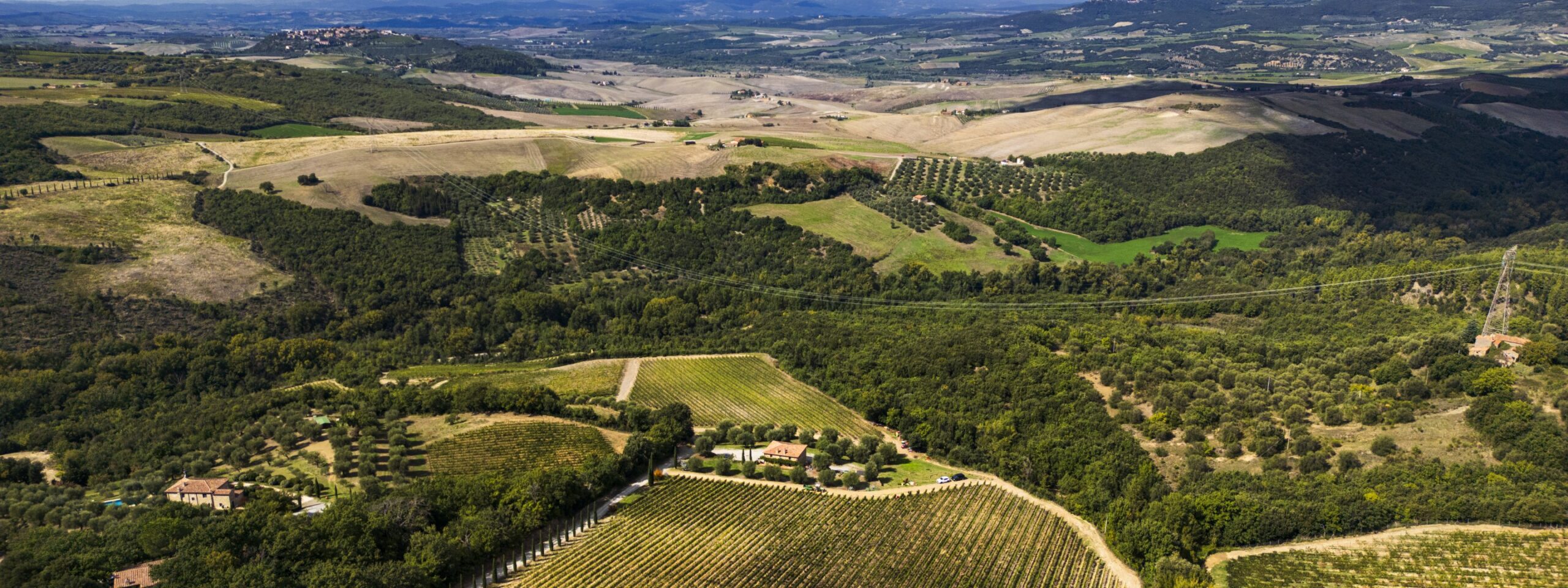
Mount Amiata is an ancient volcano that defines the character of the territory between Val d’Orcia and Maremma. Soil composition, rich in lava rocks and mineral components, forms the basis of the terroir and directly influences production expression, defining structure, freshness and depth. AURAL vineyards develop on loamy and clay-loam soils with widespread limestone presence, alkaline pH and low organic matter. Fertility is limited. The vine is forced to select.
IT IS IN THIS TENSION THAT THE IDENTITY OF THE WINE IS BORN.
Position and microclimate
Altitude, exposure and natural protection of the reliefs, combined with marine currents rising from the Tyrrhenian Sea, generate a balanced microclimate. Constant ventilation and marked temperature variations favor stable conditions and contribute to the quality and health of grapes and olives.
ALTITUDE AND VENTILATION CREATE A STABLE MICROCLIMATE.
Slow ripening
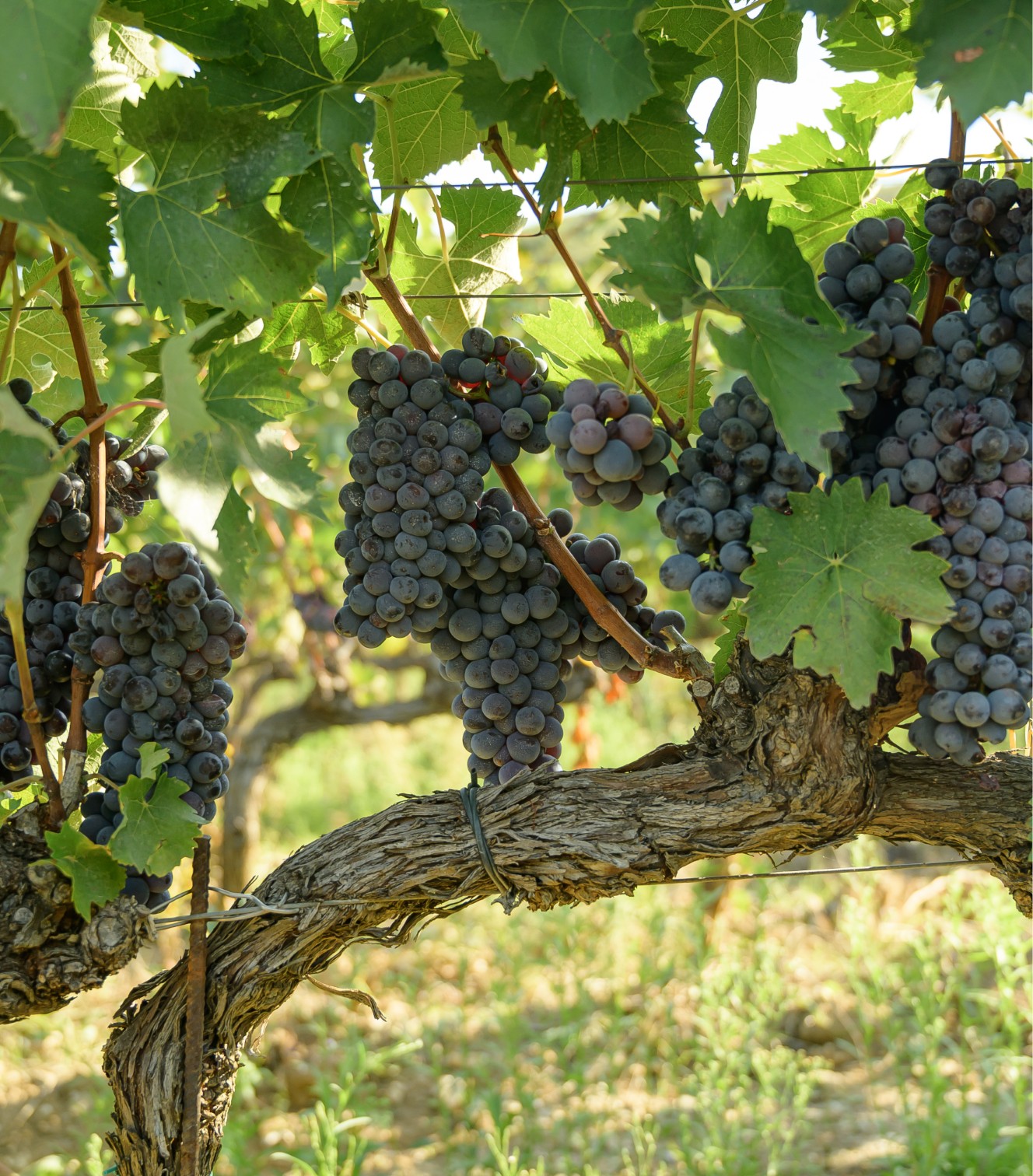
In a context where many wine regions face increasingly rapid ripening, Mount Amiata offers favorable conditions for slower, more progressive development. This preserves fruit integrity and maintains balance between concentration, freshness and aromatic precision.
SLOW RIPENING PRESERVES FRUIT INTEGRITY.
Memory and continuity
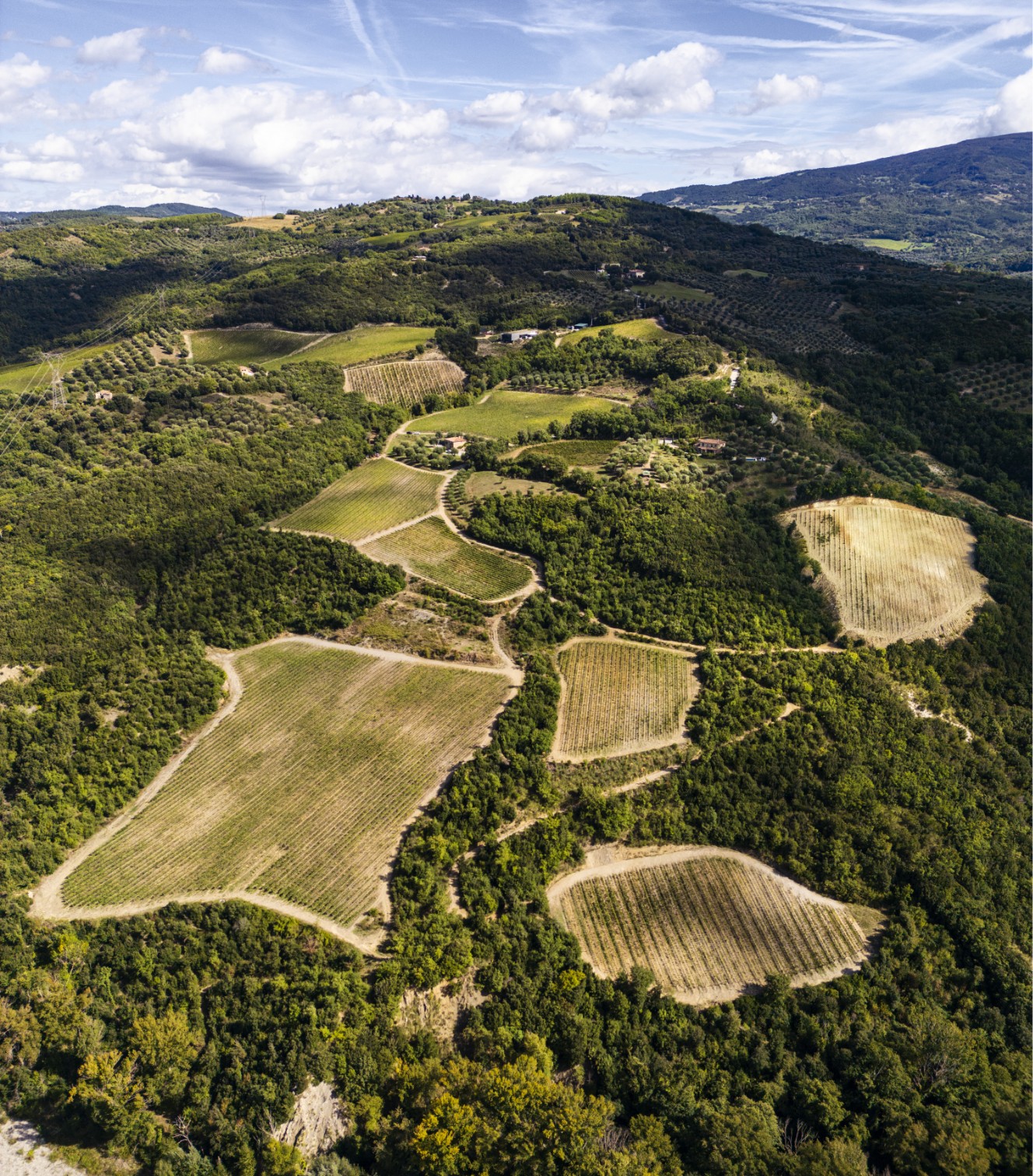
This territory has been shaped over centuries by agricultural practices and knowledge that define its identity. The presence of still-intact biodiversity and a rare environmental balance provides the basis for current production, maintaining continuity between memory and contemporary interpretation.